

Cooking outdoors can be a rewarding experience—especially when cooking on a coleman camp stove. Whether you’re simmering a pot of stew or frying pancakes with the kids, this guide helps you master meals under the open sky using the best camp stove models. Ready to dive in? Let’s go!
Understanding Cooking on a Camp Stove
Cooking on a camp stove differs from home kitchens. Unlike electric heat, flame control varies, and wind can easily affect your flame and even out the heat [1][2][3][4][5][6][7][8].
Coleman provides reliable and popular options across fuel types. Propane variants like the Cascade and Classic models deliver steady heat with easy setup. Dual‑fuel or butane options still exist, though propane is simplest in most car‑camping contexts.
- Pros: Portable, powerful, easy to ignite, wind‑blocking panels.
- Cons: Less precision in heat control for delicate tasks, heavier models limit backpacking.
Choosing the Best Camp Stove
Picking the best camp stove comes down to:
Size and Burner Configuration
One‑burner models are ultra‐compact; 2–burner models like Coleman Classic or Triton let you cook more efficiently [9][10].
BTU Power & Heat Control
Coleman’s Classic 2‑Burner offers about 10,000 BTU per burner—enough for boiling water quickly. The Cascade 3‑in‑1 adds grill and griddle attachments and up to 12,000 BTU for tougher meals [11].
Wind Protection & Portability
WindBlock panels on most Coleman two‑burners, plus fold‑flat designs and hidden handles, make setup easier even in breezy conditions [12].
Fuel Type & Availability
Propane canisters are widely available. If you’re far from shops, a dual‑fuel model might be useful—but at the trade‑off of being bulkier or trickier to clean.
Coleman Models to Consider
Here are top-rated Coleman camp stoves perfect for both beginners and seasoned camp chefs:
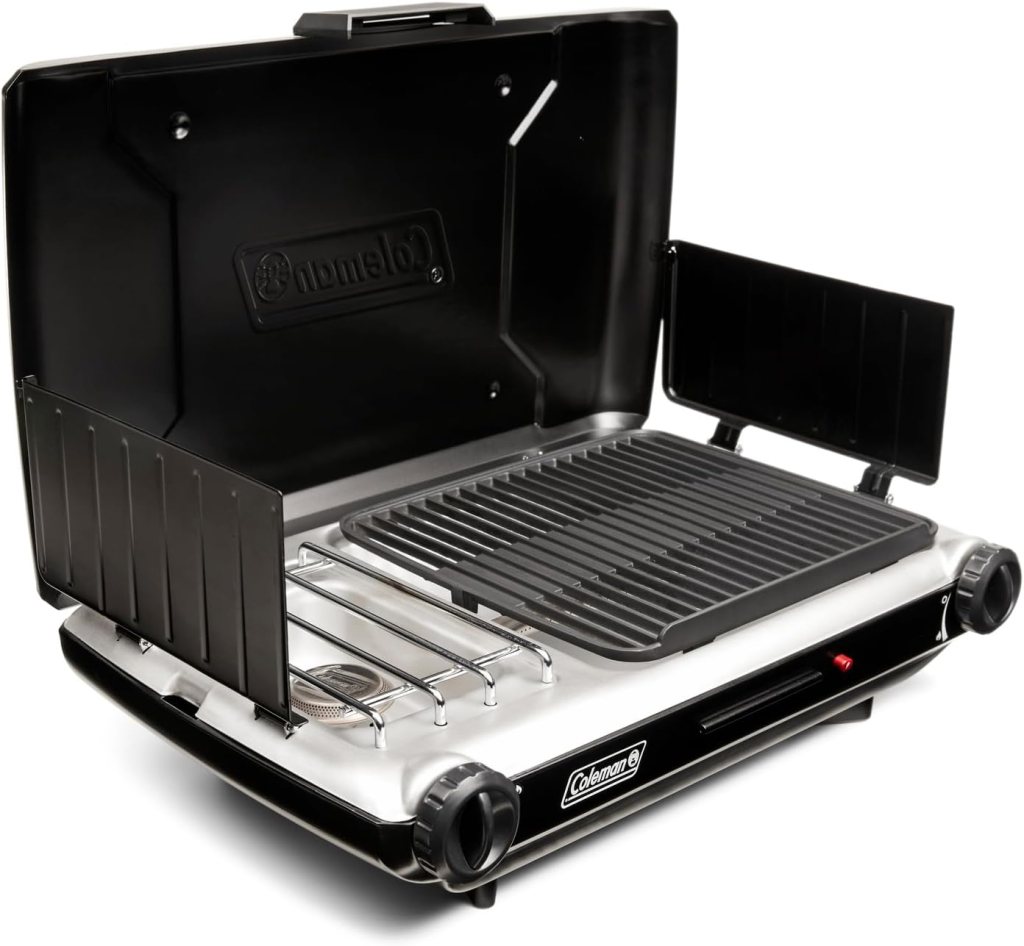
Reliable budget‑friendly 2‑burner
Coleman Classic 2‑Burner Propane Stove – Compact with wind‑blocking panels and PerfectFlow™ regulator. Excellent entry‑level two‑burner.
$79.99
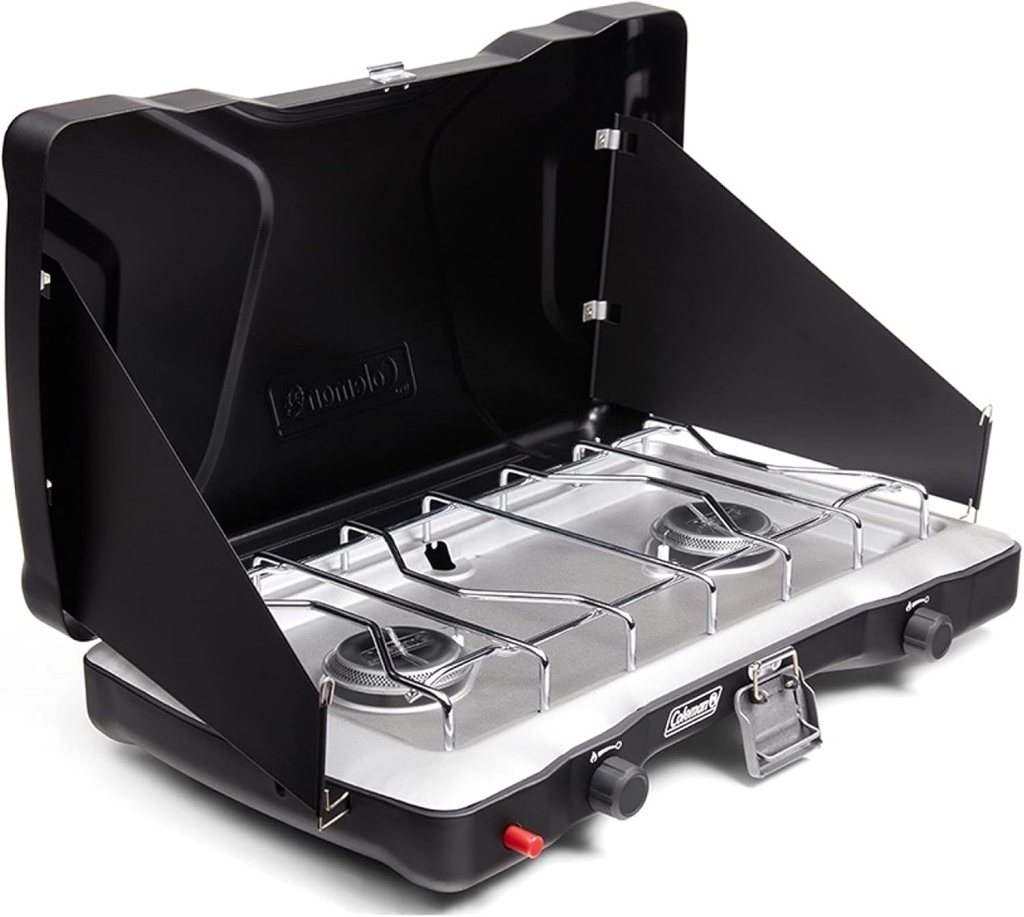
Sturdy wind‑guarded Triton model
Coleman Triton 2‑Burner Camp Stove – Similar to Classic but built with a heavy‑duty latch and chrome plated grates for cleanup ease.
$89.99

Packable Classic with WindBlock™
Coleman Cascade Classic 2‑Burner Stove – Classic variant with enhanced efficiency and portability. (For the Cascade 3‑in‑1 with attachments, see text recommendation.)
$130.00
How to Cook on a Coleman Camp Stove
Setup & Ignition
Start on a flat, sheltered surface. Many Coleman models have push‑button igniters—keep fuel canisters cool and ensure a tight seal.
Oil Your Pan & Prevent Sticking
Camp stoves heat unevenly. Use more oil than you would at home to prevent sticking. For meals like eggs or pancakes, grease the pan well before cooking [13].
Simmer & Heat Control
Cook with two pots if possible—one boiling water, one cooking food. This prevents burnt food contaminating your water pot. Simmering rice or soup is doable with patience and flame dialing [14].
Wind Protection
Use your stove’s built-in WindBlock™ shields or position it near natural wind breaks. Even small gusts can weaken the flame.
Camp Cooking Tips & Recipe Ideas
- One-Pot Meals: Think shakshuka, stews with canned beans plus grains, and pasta dishes cooked in a single pot over one burner [15][16].
- Breakfast Favorites: Pancakes, scrambled eggs, rice porridge—all easy once your flame is warmed up.
- Foil Meals: Pre-cut veggies, seasoned meat or fish, wrapped in foil for minimal cleanup and even cooking.
- Coffee & Grains: A kettle or metal mug does wonders—boil water while something else cooks.
Care, Cleaning & Safety
- Clean Promptly: Heat water in hot pans right after meals to loosen stuck food. Dry pots thoroughly to prevent rust.
- Fuel Safety: Transport propane upright and sealed. Disconnect canisters after use.
- Wildlife Caution: Streamline scents and store food securely—camp cleaning gear may attract critters if left out [17][18].
- Leave No Trace: Pack out all waste, and avoid cooking on open ground unless permitted.
Frequently Asked Questions
1. Can I cook pancakes on a Coleman camp stove?
Absolutely. Pre‑heat the pan and grease it well—adjust heat lower if they’re cooking too fast.
2. Is propane the best fuel for camping?
Yes for most car campers. Propane is readily available, stable in varying conditions, and compatible with Coleman models.
3. How windy is too windy to cook?
Even mild breeze can affect flame. Use WindBlock shields or create a barrier from backpacks or nearby rocks.
4. How do I simmer effectively on a camp stove?
Burn the flame lower and give food more time—especially for rice or stews. Two‑pot cooking helps prevent scorching.
5. What meals are easiest for camp cooking?
One‑pot meals, foil‑wrapped dinners, pancakes, and simple soups are all reliable – flavorful and low‑cleanup.
6. How do I minimize cleanup at camp?
Cook simple meals, clean pans immediately, and avoid greasy residues. Line foil packets or disposable liners where possible.
Conclusion
Cooking on a Coleman camp stove unlocks camp meals that rival home cooking—from fluffy pancakes to simmered stews. Among the best camp stove options, the Classic, Triton, and Cascade models deliver reliability, portability, and ease. Armed with wind protection, pan‑prep techniques, and smart recipes, cooking on a camp stove becomes one of the joys of camping—easy, delicious, and memorable.


Leave a comment