
Mental clutter isn’t loud. It builds quietly, task by task, notification by notification, until you find yourself staring at a screen, unsure why you picked up your phone in the first place. It’s the digital tabs left open in your brain, the to-do lists swirling in your head at bedtime, and the background noise that makes even a day off feel like work.
But here’s the good news: a true mental reset is possible. It doesn’t require a life overhaul or a weekend retreat. With the right strategies and a few practical tools, you can clear space in your mind, sharpen your focus, and move through your week with clarity and confidence.
The Hidden Cost of Mental Clutter
Mental clutter shows up in more ways than we often realize. It can be unmade decisions, unresolved stress, digital overload, or even a messy room. According to cognitive load theory, the brain can only manage a limited amount of information at a time. When that limit is exceeded, it impacts everything from memory to creativity and even how we regulate emotions.
A study from Princeton University found that physical clutter competes for your attention and increases stress. Digital spaces do the same thing. Every time you open your phone, check your inbox, or scroll through a crowded home screen, it adds to the noise.
Why “Clearing” Isn’t Just a Trendy Idea
Clearing mental clutter isn’t just a feel-good phrase. Neuroscience shows that your brain’s default mode network—responsible for wandering thoughts and self-reflection—can go into overdrive when you don’t give it structured downtime. This leads to stress, worry, and that feeling of being stuck on autopilot.
When you break the cycle with short, intentional resets, you move into a more focused mental state where real productivity and creativity can thrive.
Micro Reset Strategies That Actually Work
Here are a few simple and effective ways to reset your mental space. Each one takes just minutes but can have a powerful impact on your clarity and mood.
1. Mind Dumping with Pen and Paper

One of the fastest ways to calm mental noise is by writing it all down. A “brain dump” is a no-rules method of transferring everything from your head to paper. It can include tasks, worries, questions—anything that’s taking up space. Therapists often recommend this method to reduce anxiety and organize thoughts.
Try using a small Field Notes notebook to keep your brain dump habit consistent. Jot things down in the morning, at night, or whenever you feel mentally crowded.
2. Use Breathwork to Shift Gears

Breathing exercises help reset your nervous system fast. Techniques like box breathing (inhale for four seconds, hold for four, exhale for four, hold for four) or resonance breathing (about 5.5 seconds in and out) can calm your body and center your mind.
If you want a tech-assisted method, the Core Meditation Trainer offers guided breathing sessions using gentle vibrations and real-time biofeedback.
3. Set Digital Boundaries
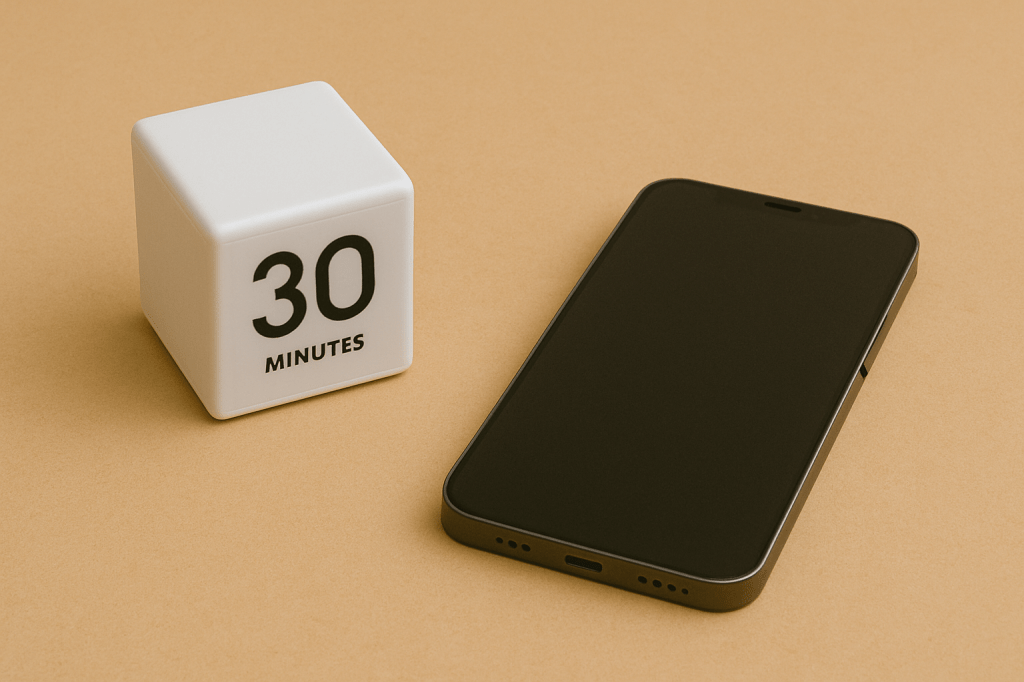
Our brains aren’t designed to deal with constant notifications, pings, and app-switching. Even short periods of intentional digital detox can reduce cognitive fatigue. Try designating a time block during your day when your phone goes on Do Not Disturb or is placed out of sight.
You can also use a visual timer like the TimeCube to set clear limits on screen time, deep work sessions, or breaks.
4. Walk Without Your Phone

Walking has been shown to improve focus, memory, and creativity. But it works best when you leave your phone behind. A simple 15-minute walk with no distractions can reset your mind and help you feel more grounded.
If you’re heading outside, make sure you’re equipped with comfortable gear. These Columbia trail shoes are lightweight and perfect for spontaneous resets on foot.
5. Try the 3-Task Rule
We often overload our days with too many to-dos, which leads to burnout and guilt. Instead, choose just three priority tasks per day. When you complete those three, anything extra becomes a bonus.
To keep this front and center, write your three tasks on simple sticky notes and place them somewhere visible. This tactic is surprisingly effective in keeping your goals focused and manageable.
Upgrading Your Daily Mental Hygiene
Clearing clutter isn’t just about the occasional reset. It’s about creating an environment and rhythm that supports ongoing clarity. Here’s how to build that into your routine.
Build Simple Rituals
- Evening reflection: Write down three wins and one thing to release before bed.
- Task transitions: Do one slow breath or quick stretch every time you shift between tasks.
- Weekly review: On Sundays, clean your space, prep meals, and review your goals.
Use Environmental Triggers to Support Focus
Your surroundings play a huge role in how your brain functions. Use sensory cues to influence your mental state.
Diffusing a clean scent like eucalyptus using the Vitruvi Stone Diffuser can help create a fresh, focused atmosphere. Try pairing it with eucalyptus essential oil to kickstart your morning reset ritual.
Lighting also matters. The Philips SmartSleep Wake-Up Light simulates sunrise and can help regulate your circadian rhythm for smoother mornings.
For blocking noise and creating calm in chaotic spaces, the LectroFan white noise machine is a great addition to your mental hygiene toolkit.
Use Technology That Clears, Not Clutters
Tech can be overwhelming, but when used well, it can actually help you stay focused. If you’re looking for a digital alternative to notebooks, the ReMarkable tablet offers a paper-like writing experience without the distractions of apps and notifications.
Need help staying off social media during work blocks? The Freedom app lets you block distracting sites across all devices. You can also use Notion to create structured lists, vision boards, or habit trackers that live in one clean, organized space.
Final Thoughts: Clarity Is Power
When your mind is clear, everything gets easier. Decisions come faster. Ideas flow more freely. You show up more fully in your work, your relationships, and your personal goals.
Mental resets don’t require hours of effort. Even five minutes of reflection, a walk without your phone, or writing down your top three tasks can change the course of your day. Start small. Stay consistent. The results will speak for themselves.
Sources
- Sweller, J. (1988). Cognitive Load Theory. Cognitive Science.
- McMains, S., & Kastner, S. (2011). Interactions of Top-Down and Bottom-Up Mechanisms in Human Visual Cortex. The Journal of Neuroscience.
- Raichle, M.E. (2015). The Brain’s Default Mode Network. Annual Review of Neuroscience.
- Lehrer, P.M., & Gevirtz, R. (2014). Heart Rate Variability Biofeedback: How and Why Does It Work? Frontiers in Psychology.
- Berman, M.G., Jonides, J., & Kaplan, S. (2008). The Cognitive Benefits of Interacting with Nature. Psychological Science.


Leave a comment