
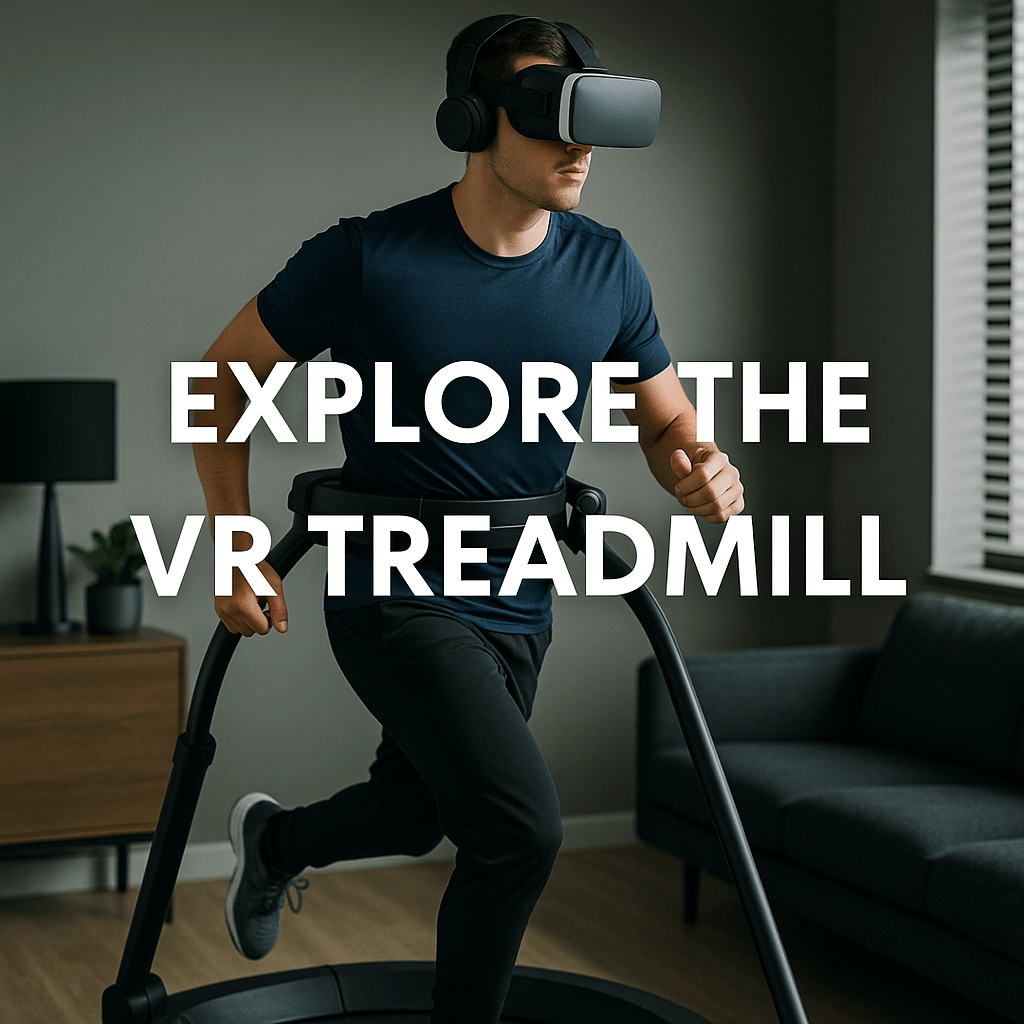
Introduction: From Boring to Borderless
If you’ve ever stared blankly at a treadmill screen, watching the seconds crawl by like molasses, you’re not alone. Traditional cardio—despite its health benefits—often suffers from one big problem: it’s painfully boring. Whether you’re pacing around the same block or dragging through another HIIT video, home fitness has hit a ceiling.
But what if your workout didn’t feel like a chore? What if your morning run took place on an alien planet? Or a high-speed rooftop chase? That future is closer than you think—and it’s coming in the form of VR treadmills.
These immersive, omni-directional platforms are set to turn the fitness world on its head, combining physical exertion with digital adventure. Fueled by advances in virtual reality, motion tracking, and gaming ecosystems, VR treadmills promise to make breaking a sweat feel more like leveling up in a video game than grinding through another rep.
1. What Is a VR Treadmill, Exactly?

Forget the belt-driven machine you’re used to. A VR treadmill (also called an omni-directional treadmill or motion platform) is designed to let users walk, jog, and run in any direction—all while staying safely in place. Worn with special low-friction shoes or a harness, users can move naturally while their actions are translated into digital environments through a connected VR headset.
The idea sounds futuristic, but these systems are already here. Companies like Virtuix, Kat VR, and Infinadeck have developed platforms that simulate natural movement, letting users roam vast virtual worlds physically—not just with thumbsticks.
Think of it as your body becoming the controller. The treadmill itself tracks foot movement, turns, and even crouches, feeding that data directly into compatible VR games. Instead of pressing “W” to move forward, you actually take a step.
It’s not just about fun—it’s about fully immersive movement, engaging your whole body while torching calories.
2. The Tech Powering the Experience
So, how does it all work?
Most VR treadmills operate using a low-friction base platform combined with either slip-resistant footwear or a waist harness. These features allow for 360-degree motion in a compact footprint. As you walk or run, sensors track your gait and orientation in real time, synchronizing every motion with your in-game avatar.
Key technologies include:
- Inertial measurement units (IMUs) to detect acceleration and angle
- Optical tracking systems (on some models) for extra precision
- High-speed wireless communication to minimize latency with the headset
- Mechanical safety restraints to keep users centered and avoid spills
These devices integrate smoothly with popular VR systems such as the Meta Quest 3, PlayStation VR2, and PC-based setups like Valve Index. Some, like the Omni One, even come bundled with a dedicated headset and console.
What’s most impressive is the low-lag, full-body immersion these platforms enable. You’re not watching your character walk—you are the character.
3. The Gamification of Fitness
Let’s face it: one of the biggest problems with exercise is motivation. That’s where gamification comes in.
With a VR treadmill, every workout becomes a mission, a match, or a quest. Whether you’re:
- Swinging swords in a gladiator arena
- Dodging bullets in a VR battle royale
- Exploring ancient ruins for treasure
- Or escaping a haunted facility full of zombies
…your body is doing the work while your mind is fully immersed in the fun.
Even without a treadmill, games like Supernatural, Les Mills Bodycombat, and Thrill of the Fight have shown how VR can push people harder than traditional routines. Add a treadmill, and you’re suddenly running across rooftops or sprinting through fantasy landscapes, with every calorie burned tied to meaningful in-game action.
The shift toward “exergaming” isn’t just a gimmick. Research shows people often work harder and longer when their focus is on winning a game instead of finishing a workout. The VR treadmill takes this to the next level—literally making fitness feel like a thrill ride.
4. Meet the Companies Building the Future
Several companies are leading the charge to bring VR treadmills into homes and gyms. Each takes a slightly different approach:
Virtuix Omni One
Perhaps the most recognizable name, Virtuix was featured on Shark Tank and later crowdfunded millions. The Omni One is designed for home use, complete with its own headset and game store. It’s compact, sleek, and surprisingly affordable compared to commercial systems.
Kat Walk
This China-based company offers multiple treadmill models ranging from home-friendly to high-end arcade units. Their systems are known for smooth directional transitions and multi-title compatibility. Many early adopters swear by the Kat Walk’s versatility.
Infinadeck
A massive, industrial-grade platform that uses a motorized omnidirectional surface (as seen in Ready Player One). It’s big and expensive but remains the gold standard for natural walking simulation. While not aimed at consumers—yet—it shows where the tech is headed.
As adoption grows, expect to see partnerships between these companies and fitness apps, AAA game studios, and even metaverse platforms. VR treadmills are evolving from niche hobby tech into serious fitness equipment.
5. Fitness in the Metaverse
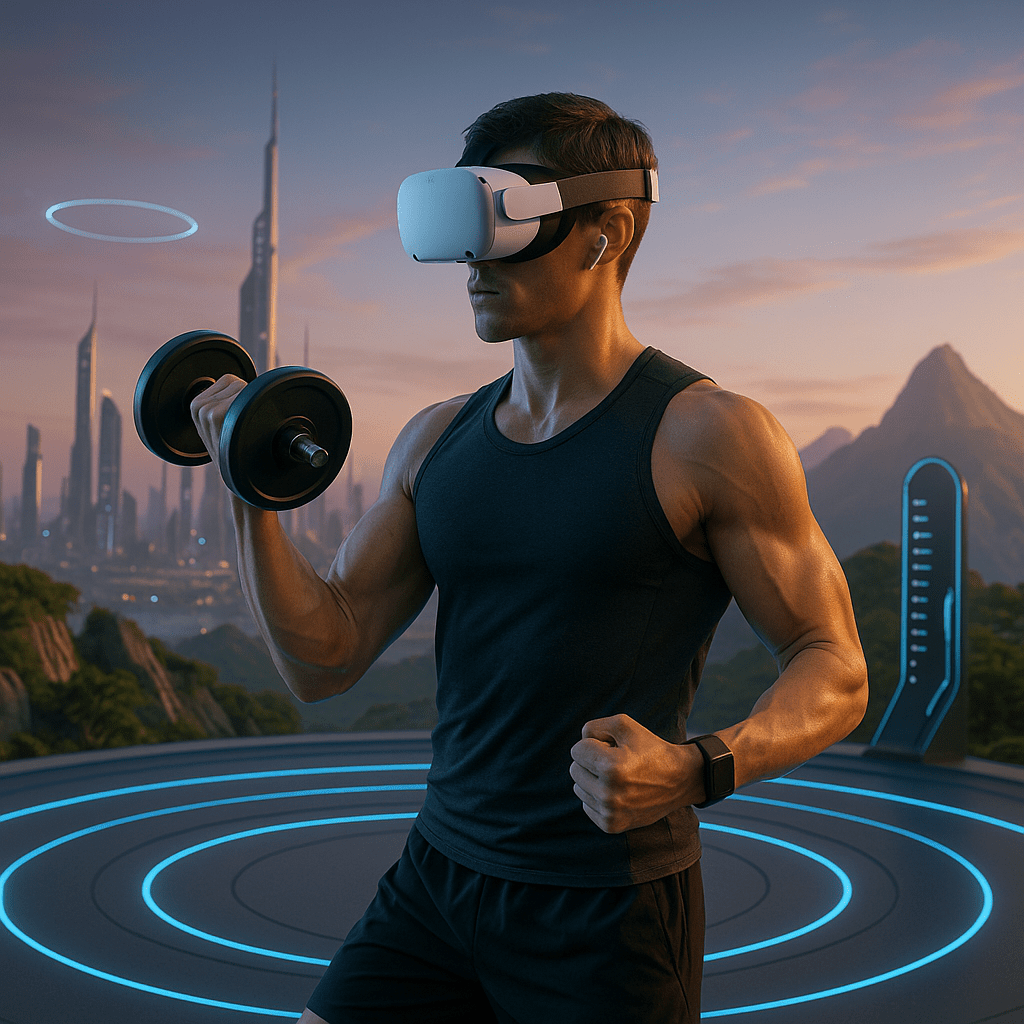
What happens when your gym exists entirely online?
That’s the promise of metaverse fitness—a blend of virtual workouts, multiplayer training, and digital socializing. VR treadmills act as the physical access point to these worlds.
Imagine:
- Attending a live spin class on a virtual mountain trail
- Competing in a 5K with friends across the globe
- Exploring immersive training grounds with real-time coaching
Companies like Meta are doubling down on this integration. The Meta Quest ecosystem already supports fitness tracking, subscription-based workouts, and health data syncing. Combine that with a treadmill, and you have the foundation for a complete virtual gym.
Wearables like Apple Watch, Whoop, and Oura Ring are also starting to sync with VR platforms, allowing you to monitor performance, sleep, and recovery in the same environment where you train.
The metaverse may still be finding its footing, but VR fitness is already proving to be one of its most practical use cases.
6. How Much Does It Cost—and What’s Holding It Back?
Let’s be honest: VR treadmills aren’t for everyone yet.
Price
- Entry-level consumer units start around $1,000–$2,500
- High-end commercial models can exceed $10,000
- That doesn’t include the VR headset or a capable gaming PC (if required)
Space Requirements
Though marketed as compact, these treadmills still take up a fair bit of room. You’ll need a dedicated area for both the treadmill and VR movement.
Learning Curve
Early adopters report a slight adjustment period. Walking on a frictionless or curved surface feels different at first. Balance, coordination, and comfort improve over time—but not everyone is patient.
Motion Sickness
While greatly reduced compared to joystick movement, some users still feel disoriented. Most VR treadmills now include harnesses and smoothing algorithms to help.
Despite these barriers, innovation is moving fast. Prices are dropping. Software support is expanding. And user reviews are increasingly glowing.
Conclusion: The Future of Fitness Is Fun Again
The next big upgrade to your workout routine might not be a dumbbell or yoga mat—but a VR headset and treadmill combo that transports you to entirely new worlds while torching calories and raising your heart rate.
The VR treadmill represents more than just a cool gadget. It’s the fusion of fitness, entertainment, and cutting-edge technology. A new way to exercise not because you have to—but because you actually want to.
From battlefields to dance floors, haunted houses to alpine runs, these devices turn the mundane into the magical.
And the best part? This is just the beginning.
Explore the Gear:
If you’re curious about getting started or want to see what’s available now, check out:
- 🥽 Meta Quest 3 – Best all-around VR headset for fitness
- 🛹 Virtuix Omni One – Compact at-home VR treadmill
- 🎮 Kat Walk C2+ – Versatile motion platform with wide game support
- 🧤 VR Safety Mat – Helps with spatial awareness
- ⌚ Whoop 4.0 Band – Tracks performance and recovery


Leave a comment